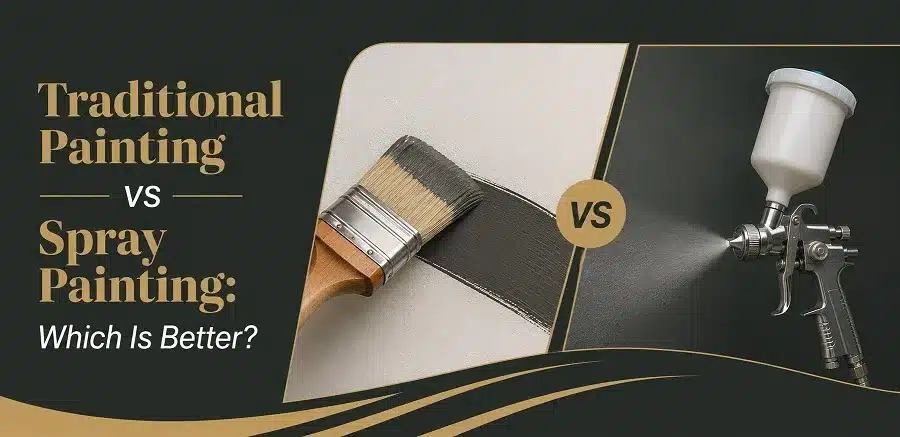
Summary: There are differences between spray and traditional painting, including coverage, ease of use, cost, time, and versatility.
When it comes to the painting project, choosing the right technique can make all the difference. However, the debate between spray and traditional painting is common nowadays. Both methods offer distinct advantages and features. However, understanding the difference between traditional and spray painting can help you choose the right method for your next projects. So, let’s explore which one better suits your needs.
What is Spray Painting? A Brief Introduction
It is a coating technique where the painters spray the paint onto a surface. It provides a smooth and uniform finish. Spraying is ideal for large areas and complex geometries. In this process, the painters do not use bristles to spread paint. They use a pressurised mechanism to break liquid paint into microscopic droplets. When the paint hits the object, these droplets form an even, solid coat.
Key Differences Between Traditional and Spray Painting
Ease of Use
Spraying is an easier process when it comes to covering a large area or painting on a complex surface. However, it is essential to avoid common spray painting mistakes, such as drips, runs, and overspray. You can achieve a smoother and more even finish. On the other hand, traditional painting works better on flat surfaces. It is a comparatively slow process. That is why spraying is a better option for many.
Coverage Difference
Spraying provides smooth and even coverage. It is particularly effective on uneven or textured surfaces. With a professional spray paint job, you can avoid visible brush strokes. It is ideal for surfaces with intricate designs. Traditional paint can offer you good coverage on flat, large surfaces like walls and ceilings. However, sometimes it leads to visible brush or roller marks.
Cost Comparison
Spraying can be completed faster, and labour time is reduced. This approach makes spray painting more cost-effective. It means you can experience the convenience and speed without breaking the bank. Traditional paint can be economical for large areas. However, you should also consider the labour cost and necessary tools, such as brushes, rollers, and other supplies.
Time Needed
Time-saving solutions are transforming the way of home improvements. Spraying can reduce labour time. That is why it is ideal for large projects or tight deadlines. One convenience of this method is speed. For example, if a room takes hours to cover with rollers, spray painters can complete it in minutes. This efficiency is particularly beneficial where traditional methods can feel time-consuming.
Versatility
Modern spray painting projects have revolutionised how we approach various projects. Traditional painting is better for flat surfaces, but spraying actually offers unmatched adaptability. Whether you want kitchen respraying, exterior spraying, or intricate surfaces, you can achieve consistent results across different surfaces. The versatility makes spraying a go-to choice for any project.
Be Ready for Your Next Painting Project!
Choosing the right painting type for your home can make all the difference. With a spray gun, you can achieve a professional finish while saving a significant amount of time. This method is perfect for both large areas and small, intricate surfaces.
Recent Posts

19 September, 2026