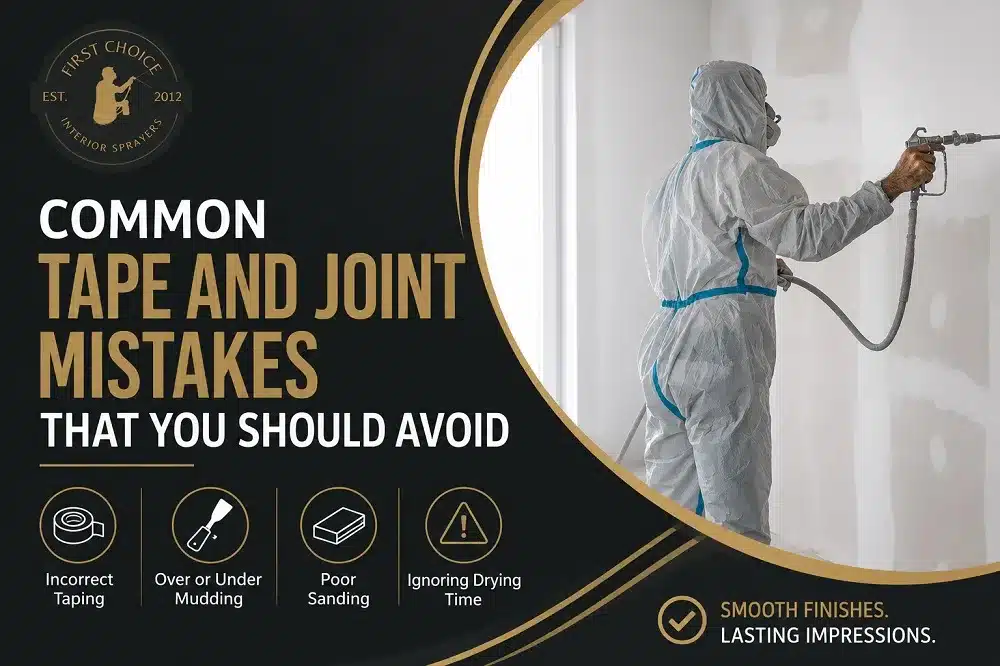
Summary: Common taping and jointing mistakes are insufficient preparation, neglecting drying times and application techniques, overlooking feathering techniques, and insufficient application of joint compound.
Do you want to achieve a flawless finish in taping and jointing? This job requires expertise, precision, patience, and attention to detail. However, sometimes, professionals can make some common mistakes that can compromise the outcome of the job. In this guide, we will explore some common tape and joint mistakes and how you can avoid them so that your next projects can be perfect.
Here you go!
What Tape and Joint Mistakes You Should Avoid to Ensure a Flawless Result
Insufficient Preparation
One of the most common mistakes in taping and jointing is the lack of preparation. It is essential to check the board for defects. It is also crucial to inspect the surface thoroughly and address any imperfections. You need to pre-fill any gaps with joint filler. You can also use expanding foam where necessary before starting the taping process.
Underestimating Drying Times
Do not rush through the drying process. It is a common mistake of taping and jointing. Each layer of joint compound requires a certain time to dry properly. This process requires patience. It is tempting to move on to the next step fast. But proper drying is essential to prevent issues, like shrinkage, cracking, or uneven surfaces.
Ignoring Joint Tape Application Techniques
The application of joint tape is an art. In this step, professionals also make mistakes. Do not simply lay tape without considering the direction and technique. Plus, it is crucial to make sure the tape is embedded evenly. It helps to avoid air pockets and follow the contours of the joint. You can ensure a seamless integration with the drywall.
Overlooking Feathering Techniques
Proper feathering is essential. It helps to blend the joint compound with the surrounding drywall. What if you neglect to feather the edges of the compound? It can create noticeable ridges and imperfections. Proper feathering techniques, such as using a wide knife at an angle, are crucial for a gradual transition between the coated area and the existing wall.
Inadequate Joint Compound Coverage
A common mistake in taping and jointing is the insufficient application of joint compound over seams and joints. When the compound is not spread wide enough over the entire seam, it can create gaps or inadequately cover the joint. To avoid this, proper coverage is crucial. Applying a sufficient amount of joint compound.
Summing Up!
When you are well aware of the mistakes, you can improve the quality of your taping and jointing work. You can achieve a successful drywall finish.
Recent Posts



19 September, 2026