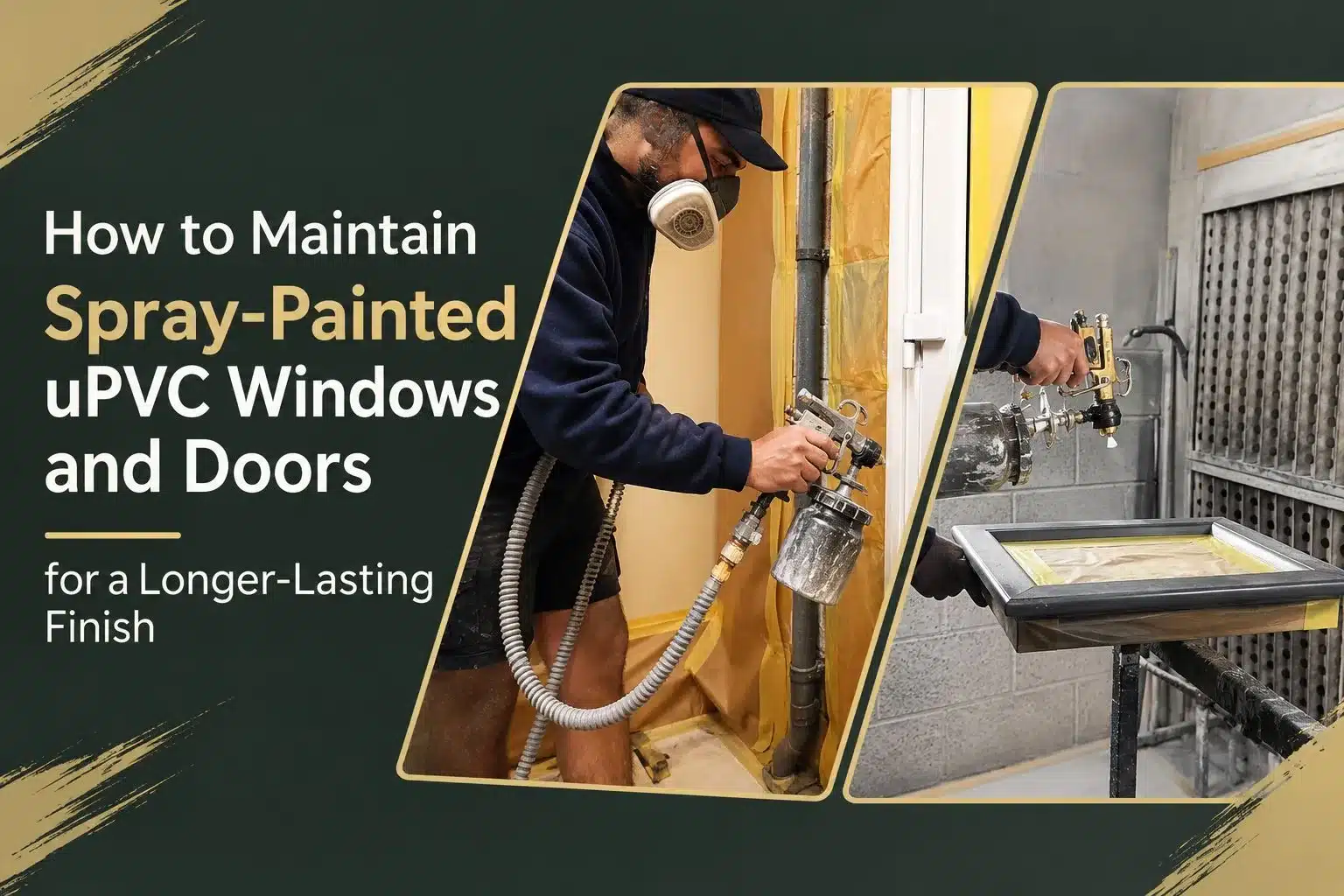

Summary: The durability of composite door spray painting depends on surface preparation, quality primer, weather-resistant paint, suitable weather conditions, proper spray application, and regular care. Professional techniques and gentle cleaning protect the finish.
Your front door is the thing that people notice first about your home. What if the composite door starts looking faded, scratched, or tired? Do not worry! Professional spray painting can make a big difference. However, getting a beautiful finish is easy. But how can you make it look fresh and vibrant for years? Various factors can affect the durability of composite door spray painting. Let’s explore the key factors.
What Influences The Durability Of Composite Door Spray Painting
Surface Preparation
Great painting results do not only come from spraying only the first coat of paint. Composite doors need careful preparation before painting, as their surfaces are smooth and made from different materials. Dirt, grease, and old coatings can prevent proper bonding with new paint. So, before the painting begins, thorough cleaning, sanding, and preparing imperfections is essential to reduce peeling, cracking, or uneven coverage later.
The Quality of Paint and Primer
Not all coatings are suitable for exterior use. A composite door faces rain, moisture, sunlight, and temperature changes. So, the coating needs to cope with these conditions. It is essential to use quality primers so the coating adheres properly to composite materials. It is also crucial to use high-quality, weather-resistant paints for a tougher protective finish. Using the right products can make a noticeable difference in overall durability.
Weather Exposure
Your front door is always exposed to the outdoors. It experiences rain, sunlight, humidity, wind and changing temperatures. All of them can gradually put stress on the exterior coating. UV exposure, moisture, and fluctuating temperatures can cause fading. That is why exterior spraying should be planned around suitable weather conditions. Professional painting work is generally scheduled during more stable periods.
Application Technique
Even the best paint cannot deliver desired results if it is applied incorrectly. Spray painting offers a smooth and consistent finish, but it requires the right equipment and technique. A controlled spray process helps you achieve even coverage without any brush marks or roller lines. The right application and sufficient drying time between coats can create a stronger and more uniform finish.
Everyday Use
A front door is used most often. Handles and surfaces are touched repeatedly, and dirt can build up. Over time, this everyday contact can affect the coating. Professional spray painting is better equipped to handle normal wear. That is why spraying is the best choice for exterior surfaces. You just need to keep the surface clean and look for small marks before they become bigger problems.
Professional Work and Regular Care
Durability is about the complete process. Careful preparation, primers, exterior coatings, controlled spraying, drying, and maintenance all work together. After spraying, gentle regular cleaning can help to keep the finish looking fresh. Avoid harsh cleaning products or abrasive materials that can damage the coating.
Wrapping Up!
A professionally sprayed composite door can give you the fresh appearance without replacing the entire door. With the right preparation, products, application, and maintenance, you can keep it attractive for years. If you have any queries, please call us today!
FAQs
Q: How can I make composite door spray paint last longer?
Proper surface preparation, high-quality primer, professional application, suitable weather conditions, proper drying, and regular gentle cleaning can improve durability.
Q: Can weather conditions affect composite door spray painting?
Yes. Sunlight, rain, humidity, wind, and temperature changes can gradually affect the coating. Professional spraying should be done during stable, suitable weather.
Q: How should I maintain a sprayed composite door?
Clean the door gently and regularly with suitable products. Avoid abrasive materials and harsh cleaners. Address scratches or marks promptly.
Recent Posts


19 September, 2026