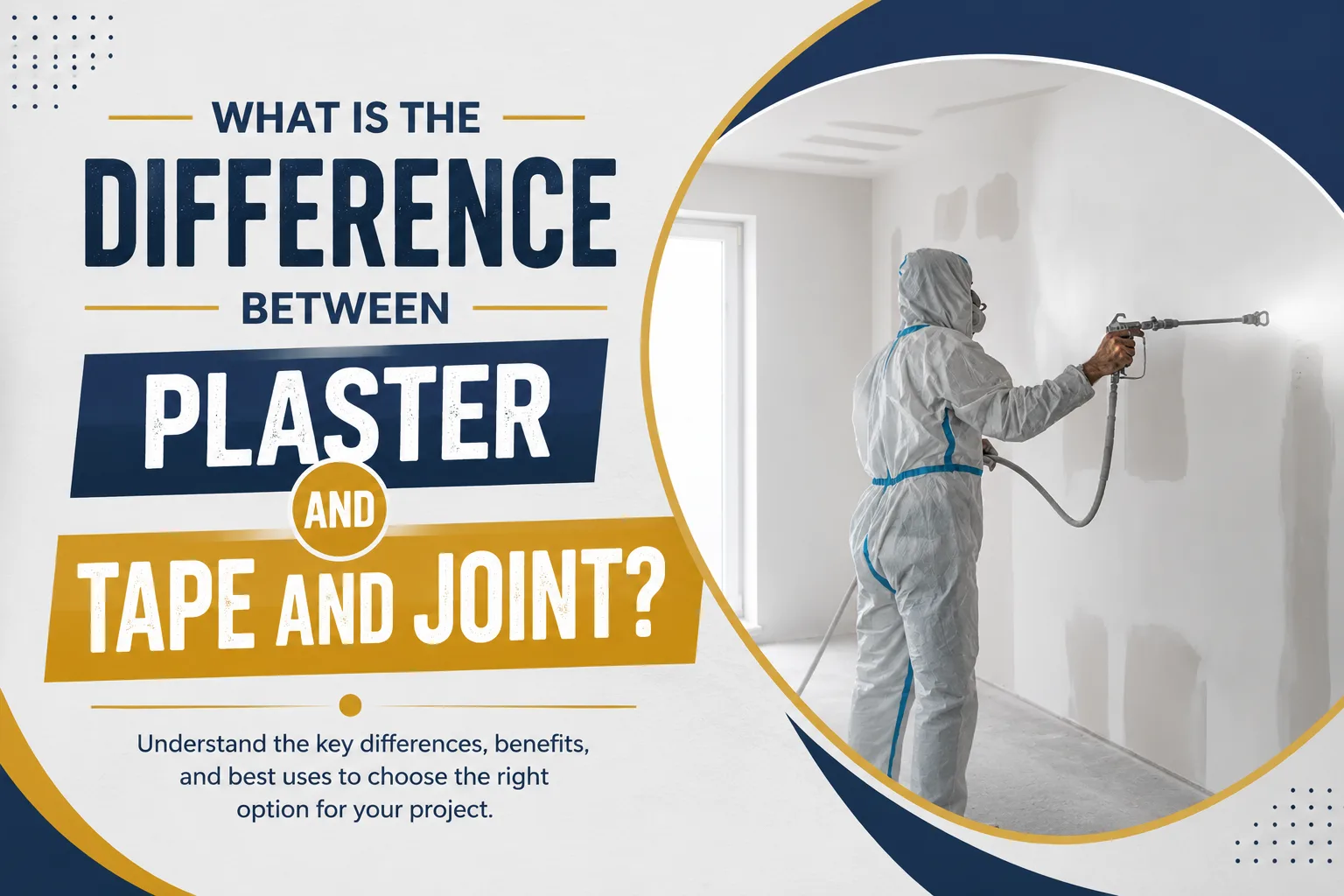
Summary: There are many differences between tape and joint and plastering. The application method, timing of applying, durability, and finishing are different.
Whether you are renovating or building a new home, you need to choose between tape and joint and plastering. Each method has unique features, strengths, and ideal applications. You need to understand all of these to make an informed decision. This blog will help you learn about the difference between plastering, taping, and jointing. Let’s dive in!
What is Taping and Jointing?
Taping and Jointing is a professional dry-lining technique used to seal, reinforce, and finish plasterboard joints and corners. It creates a smooth, seamless surface. It brings plasterboard up to the standard and finish that is ready for decoration. The key component of this process is:
Taping: Specialised paper tape is embedded into a jointing compound along the seams where two plasterboards meet. It prevents cracking and strengthens the joint.
Jointing: This process involves a three-coat system. The first coat sets the tape, then comes a second coat, and a final finish coat. Each layer should dry before the next. The right tape and joint paint system is essential for a beautiful finish.
Finishing: Once all coats are dry, the jointed area is sanded to create a perfectly flat, level finish with the surrounding plasterboard.
What is Plastering?
Everyone knows about plastering. It is the process of applying a thin layer of gypsum plaster (skim coat) over the entire surface of plasterboard (drywall). It creates a seamless, solid, and durable finish. Taping and jointing is a faster, cleaner alternative to plastering.
Key Differences Between Taping and Jointing, and Plastering
Application Method
Plastering involves applying a wet, gypsum-based plaster that is known as a skim coat over the entire surface of the plasterboard. It creates a solid, uniform coating across the whole wall. Tape and joint do not cover the whole wall. It is applied only to the joints and corners where panels meet.
Timing and Speed
Plastering requires more time to apply and a significant time period to dry before painting. But tape and joint are much faster to install. Because only the seams are covered, the material dries more quickly. The painters can start much sooner. That is why a preferred choice for commercial spaces or with tight deadlines.
Durability and Strength
Plastering can create a harder, more robust finish. The solid gypsum layer is resistant to knocks, scrapes, and damage. Tape and Joint can offer you an effective result. The joints and screw holes are covered with special tape and joint compound, then sanded smooth to create a seamless, paint-ready surface.
Finishing and Texture
Plastering provides a completely flat, non-porous, and perfectly smooth finish. On the other hand, tape and joint create a smooth final surface. As the joint compound and the plasterboard paper are different materials, it results in a smoother surface. The best part? This method is generally quicker and less labour-intensive than plastering.
Final Thoughts!
Choosing between tape and joint and plastering depends on the look and functionality you want. However, professional taping and jointing can help you achieve the finish that you expect and deserve.
Recent Posts


19 September, 2026